Things worth knowing.
The machine looked alive. Then someone named it.
Before Caterpillar was a corporation, it was a description of the way a machine moved.
Read the story ↗02 · SMALL MACHINE, BIG IDEAA turkey farmer had a problem. The skid-steer was the answer.
How a farmer's cramped buildings pushed two brothers toward a new kind of loader.
Read the story ↗03 · THE COLOR OF THE MACHINECaterpillar wasn't always yellow.
Before the famous yellow machines, early Caterpillar tractors wore gray and red.
Read the story ↗A few milestones that changed how work gets done.
Not an exhaustive history. Just some turning points that deserve a closer look.
Tracks change the ground game
Holt develops a commercially successful tracked tractor; the track concept helps distribute weight on soft ground.
Check the source ↗Holt + Best become Caterpillar
Two rival tractor companies combine, carrying a recognized name and dealer network into a new business.
Check the source ↗The machines turn yellow
Caterpillar changes its standard equipment color from gray with red trim to Hi-Way Yellow.
Check the source ↗Hydraulic excavation advances
Poclain's history records a hydraulic excavator built by Pierre Bataille.
Check the source ↗The turkey-farm loader
The Keller brothers demonstrate a compact three-wheel loader and Melroe takes interest.
Check the source ↗A new kind of turning
Melroe's four-wheel M400 introduces the first true skid-steer loader, according to Bobcat.
Check the source ↗Attachments change the job
Bobcat credits this year with introducing its quick-change Bob-Tach attachment system.
Check the source ↗What's a deadhead? A wet kit? A final drive?
The industry has a vocabulary all its own. Some of it is obvious to the people who live with machines and completely mysterious to everyone else.
We're building a practical, searchable glossary of the terms buyers, mechanics, haulers and dealers use when they talk shop.
Open the Shop Talk dictionary ↗When the machines have history.
The farmers who saved their store. A creek-powered mill that became a tractor dealer. A logging yard that started selling railcar movers.
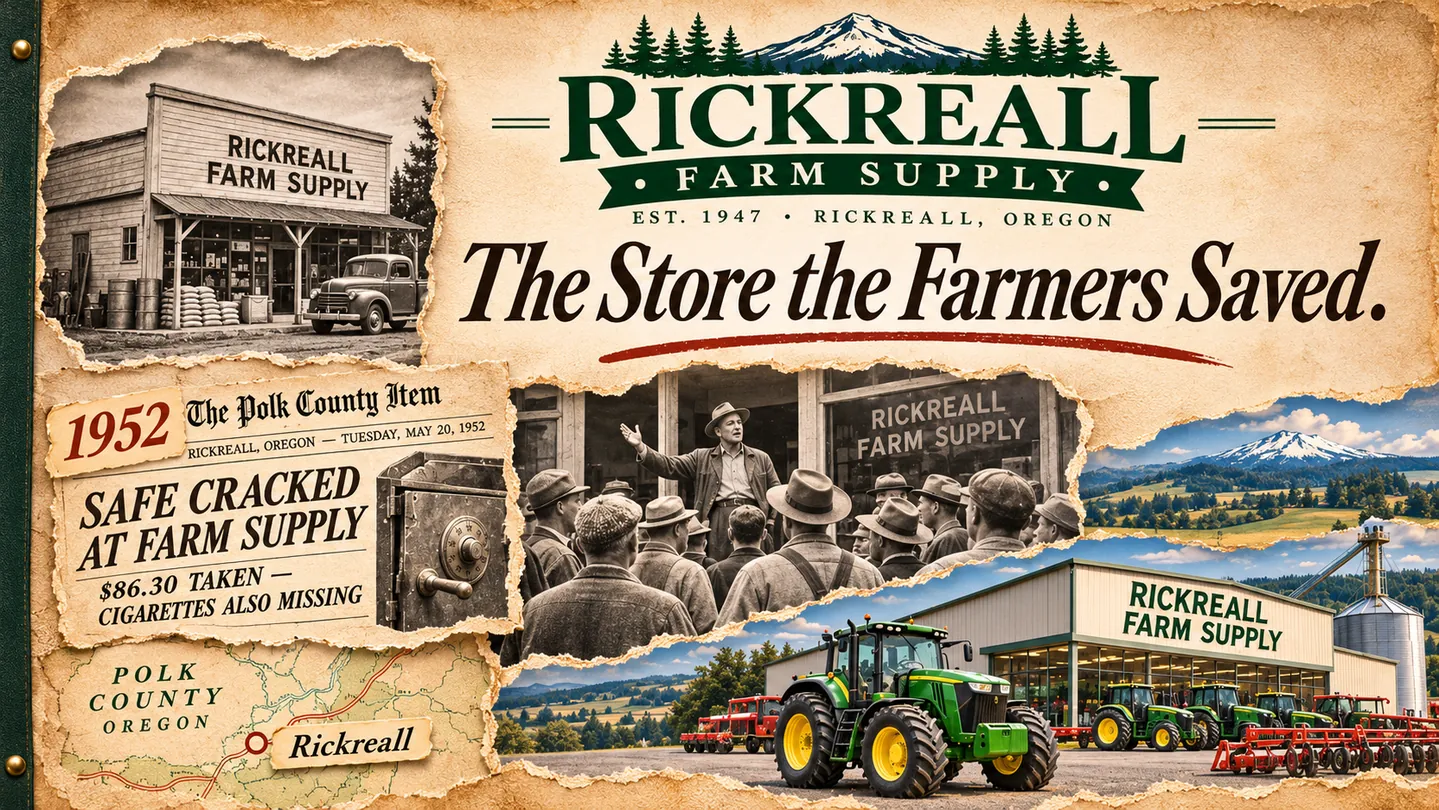
The store the farmers saved.
A co-op collapsed. The farmers decided the store would survive.
Open the story ↗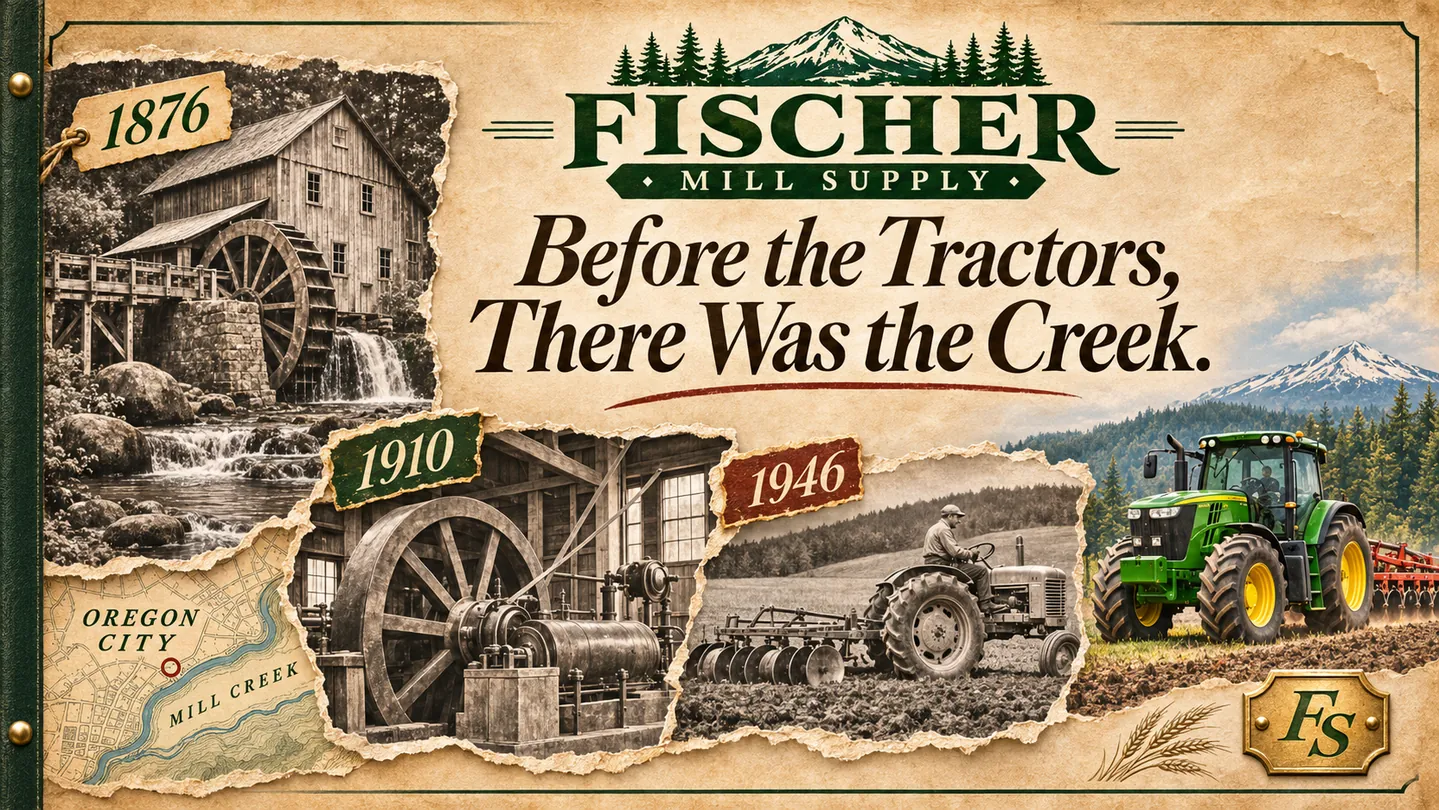
Before the tractors, there was the creek.
A water-powered mill became a multi-generation machinery business.
Open the story ↗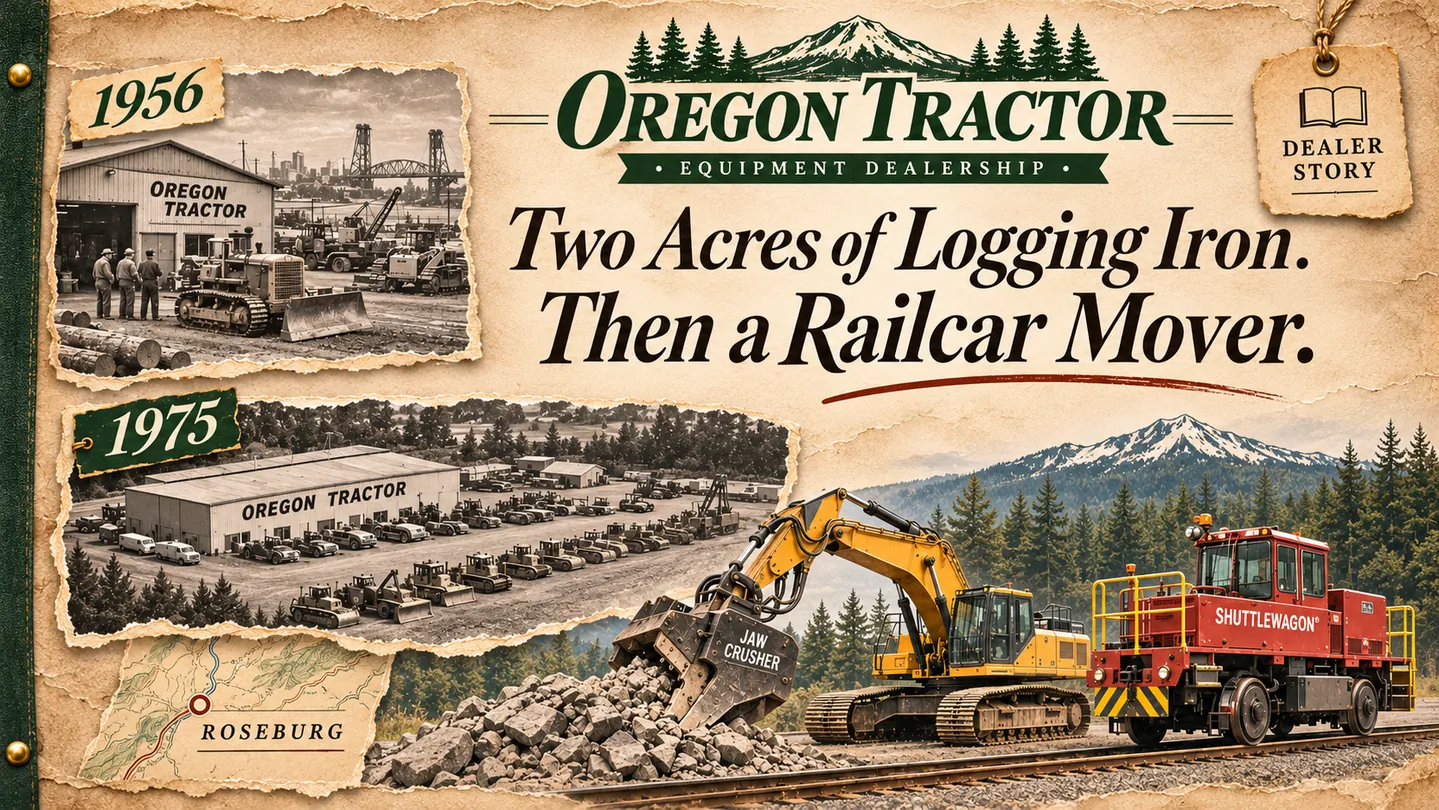
Two acres of logging iron. Then a railcar mover.
From a used-machinery lot to excavators, crushers and railcar movers.
Open the story ↗Old newspaper ads. Strange machinery trades. Family businesses. Stories worth opening.